Health and Safety Policy for Cleaners Docklands
 This health and safety policy sets out the principles and practices that support safe, consistent, and responsible cleaning services. It applies to all work carried out by Docklands cleaners, including routine cleaning, specialist tasks, and ad hoc assignments in occupied or unoccupied premises. The aim is to protect employees, clients, visitors, and anyone else who may be affected by cleaning activities.
Our commitment is to provide a safe working environment by identifying hazards, reducing risk, and maintaining high standards of work. Health and safety is not treated as a separate task; it is built into planning, supervision, training, and daily operations. Every cleaner is expected to work carefully, report concerns promptly, and follow approved procedures at all times.
We recognise that cleaning work can involve slips, trips, chemical exposure, manual handling, electrical equipment, and contact with waste or contaminated surfaces. For this reason, cleaners in Docklands are trained to assess each task before starting and to use suitable methods, equipment, and protective measures. This policy supports a culture where safe practice is always prioritised over speed.
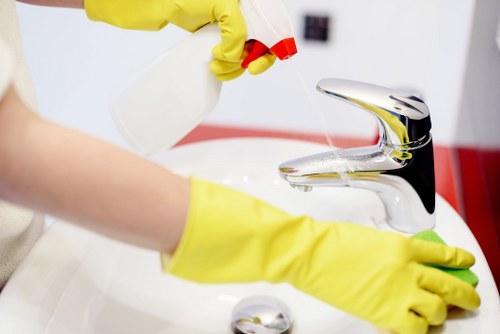 Risk assessment is central to our approach. Before work begins, relevant hazards are reviewed so that appropriate controls can be put in place. These may include warning signage, restricted access, personal protective equipment, ventilation, safe storage, and careful task sequencing. Where the working environment changes, the assessment is updated to reflect the new conditions.
All staff are expected to use equipment correctly and inspect it before use. Faulty tools must not be used and must be reported immediately. Cleaning machines, extension leads, mops, ladders, and other items must be suitable for the task and maintained in good condition. Safe operation includes keeping floors clear, avoiding overfilled containers, and ensuring electrical items are handled with dry hands and appropriate caution.
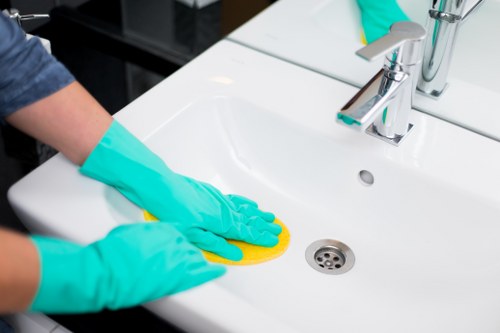 Chemical safety is especially important in professional Docklands cleaning. Cleaning products are selected with care and used according to instructions, with attention to dilution, ventilation, and storage. Containers should remain clearly labelled, and incompatible substances must never be mixed. Staff are reminded to wear gloves, eye protection, or other protective equipment when required, and to wash hands after handling products or waste.
Manual handling is another key area of control. Loads should be assessed before lifting, carrying, pushing, or pulling. Whenever possible, heavy items are broken down into smaller loads or moved using suitable aids. Cleaners are encouraged to maintain good posture, avoid sudden movements, and ask for assistance when tasks exceed safe limits. Proper handling reduces the risk of strain and injury over time.
Housekeeping standards must remain high during and after every job. Cables should be positioned safely, spillages should be dealt with quickly, and equipment should be stored in designated areas when not in use. Clear walkways and tidy work areas help prevent accidents and create a safer environment for everyone. Particular care is needed in locations where the public, staff, or contractors may be moving through the area.
Training and supervision support the effective delivery of this policy. Every cleaner receives instruction relevant to their role, including safe use of materials, emergency response, infection control where necessary, and reporting procedures. Supervisors monitor work practices, reinforce expectations, and provide guidance when tasks are unfamiliar or when hazards are identified. This helps maintain consistent standards across all cleaning operations.
Emergency preparedness is also included within our safety commitment. Staff must know how to respond to incidents such as spills, cuts, falls, fire alarms, exposure to substances, or equipment failure. Incident reporting should take place as soon as possible so that appropriate action can be taken and lessons can be learned. Accurate records support both prevention and continuous improvement.
Personal responsibility is essential. All employees are expected to work soberly, follow instructions, use protective measures, and avoid any behaviour that could place themselves or others at risk. Safety rules apply equally to temporary and permanent staff, and failure to follow them may result in further action. Good judgement, awareness, and communication are vital parts of professional cleaning.
 Occupational health is also protected through sensible working arrangements. Rest breaks, hydration, task rotation, and realistic scheduling can reduce fatigue and support safe performance. Where necessary, additional measures may be introduced for workers with health conditions or temporary restrictions, provided these can be managed safely. The goal is to keep the workforce well, alert, and able to deliver reliable service.
Monitoring and review ensure that the policy remains effective. Feedback from inspections, incident reports, and supervision is used to improve procedures and remove avoidable risks. Changes in work methods, equipment, or legal expectations are considered when reviewing safety arrangements. This allows Docklands cleaning services to remain practical, compliant, and responsive to real working conditions.
This policy applies to all cleaners, supervisors, and associated staff involved in cleaning duties. It should be read alongside relevant procedures, training materials, and risk assessments. By following this framework, we promote a safer workplace, protect people from harm, and maintain the professional standards expected of every cleaning assignment.
 Ultimately, our approach to health and safety for cleaners in Docklands is based on care, responsibility, and consistency. Every task should be completed with attention to hazard control, proper equipment use, and respect for the wellbeing of others. Through these principles, we support a safer and more dependable service for all.